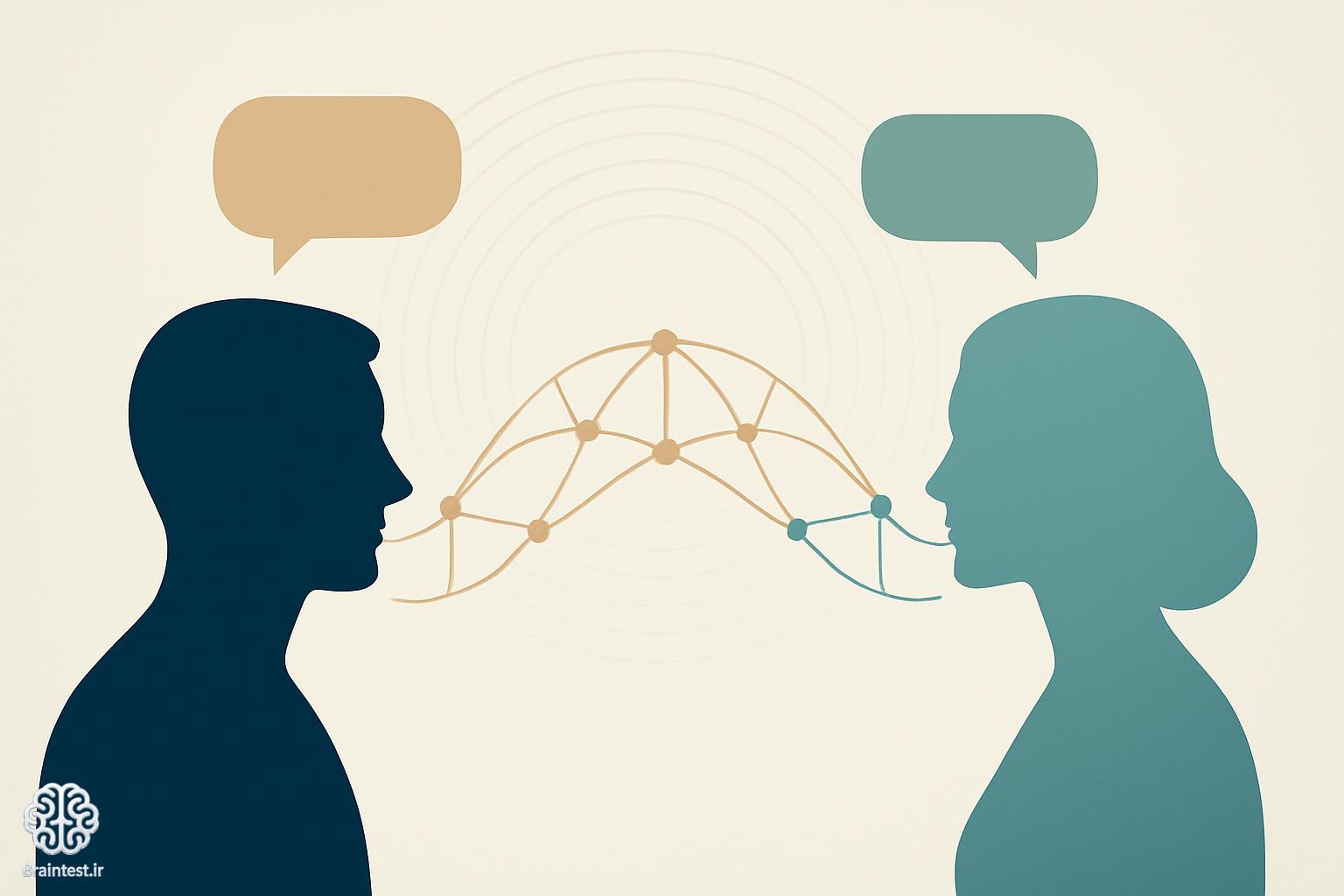
Practical Guide to Couples Therapy Sessions: From the Conflict Pattern to Improved Effective Communication
Couples therapy has the greatest impact when, instead of focusing solely on momentary feelings, recurring conflict patterns are identified and managed. In practice, many disagreements are not the result of “lack of love” or “bad behavior on the part of either person,” but rather of communication patterns and behavioral cycles—cycles in which one behavior triggers a specific response, and the same process repeats again and again. This guide explains the structure of common couples therapy sessions in a practical way, so the path from conflict to improved communication becomes clearer and more actionable.
1) What Is the Goal of Couples Therapy Sessions in Practice?
The main goal of couples therapy is to help create effective dialogue, reduce the intensity of conflict, and replace harmful behaviors with healthier strategies. This goal is typically pursued through several specific achievements:
- Reducing the intensity and frequency of conflicts by identifying triggers and response styles
- Improving the ability to express needs and concerns without absolute blame or defensiveness
- Rebuilding mutual understanding of how each behavior affects the other
- Creating a practical communication map for frequently occurring situations (such as financial decisions, roles at home, or disagreements over the daily schedule)
Couples therapy is usually not a single, linear process; it is a step-by-step pathway, with a specific focus at each stage.
2) Identifying the Conflict Pattern: The Starting Point of the Sessions
In the initial sessions, the focus is not on “telling the story.” The focus is on the “recurring pattern.” The therapist usually asks the couple to present a clear picture of common conflicts: what topic most often leads to disagreement, what happens before an outburst, and what behaviors appear once the conflict begins.
For many couples, there is a simple yet powerful cycle:
- Trigger (e.g., inattentiveness, arriving late, or different interpretations of a behavior)
- Automatic mental interpretation (e.g., “There’s no need for respect” or “I’m not being seen”)
- Behavioral reaction (sarcasm, prolonged silence, sharp tone, or arguing over details)
- Outcome (increased tension, disconnection, or heightened distrust)
Once this cycle is seen more precisely, it becomes more possible to change “behavior and interpretations.” Sometimes the main problem is not the content of the conversation; it’s the speed and the way the defensive state is entered.
3) Session Map: From Narrative to Real Skills
In most couples therapy approaches, sessions typically follow this sequence:
3-1) Gathering Information and Aligning Goals
In this stage, the therapist tries to gain an overall picture of relationship history, problem-solving methods, and highly tense sensitivities. At the same time, shared or agreed-upon goals are defined—goals such as “reducing intense arguments,” “being able to talk without insults,” or “coordinating decisions in everyday life.”
3-2) Clarifying the Role of Feelings and Interpretations
Disagreements are often fueled by emotions such as anger, fear of being left, or chronic fatigue. But feelings themselves are not the problem; the problem is the interpretation of feelings and turning them into behavior. At this stage, “automatic interpretations” become especially prominent.
3-3) Practicing Effective Communication Skills
Sessions move toward practical exercises—skills such as:- expressing needs or discomfort without attributing bad intentions- active listening and summarizing what was said- having a conversation within a specific time frame to prevent arguments from dragging on
3-4) Setting Conversation Rules During Tension
In couples therapy, agreements are formed for peak times of disagreement—such as pausing the discussion when tension reaches a level where constructive dialogue is no longer possible, or setting a time to continue the conversation later.
3-5) Generalizing to Real Life
At the end of each stage, change must be transferred to real situations. This part is usually accompanied by small but purposeful assignments—not to “test” the couple, but to practice alternative behaviors in everyday contexts.
4) Common Tools for Breaking the Conflict Cycle
4-1) Changing Language: From Attacks to Descriptions
One of the effective changes in couples therapy is moving from sentences that target personality to sentences that describe behavior. For example, instead of “You’re irresponsible,” the focus becomes “When this happens, it creates concern.” Such a language shift usually reduces defensiveness and opens the way for more constructive dialogue.
4-2) Feedback with a Clear Structure
Feedback is helpful when it:- is precise and brief- refers to “observable behavior”- comes with a feeling and a need- ends in alternative solutions
This type of feedback prevents the conversation from turning into a power struggle.
4-3) Managing Silence and Rejection
Some couples, instead of discussing during conflict, fall into prolonged silence or rejection. This behavior can function like gasoline for the conflict cycle. In couples therapy sessions, the consequences of “cutting off communication” and appropriate alternatives are usually addressed (such as clearly announcing a short break and returning).
4-4) Practicing Empathy Without Fully Agreeing
Empathy does not mean full acceptance. In couples therapy, the aim is to help each person understand the other person’s moment from their own perspective and express it respectfully. This work often reduces hostile interpretations.
5) The Role of Anxiety, Anger Control, and Obsessive Thinking in Couples’ Relationships
Many couples therapy problems have psychological roots, but they appear in the form of communication and conflict.
5-1) Treating Anxiety and Its Impact on Behavior
Anxiety can lead to excessive sensitivity to cues, negative interpretations, and rapid reactions. In couples therapy sessions, it is typically attempted to ensure that signs of anxiety are not confused with the communication message itself, and calming and emotion-regulation strategies find practical use in dialogue.
5-2) Treating and Controlling Anger
In relationships, anger sometimes appears as a sudden explosion or as a slow, exhausting process. Couples therapy can help with step-by-step anger management instead of blame: recognizing the start of rising tension, using a controlled pause, and practicing alternative responses before reaching the explosion point.
5-3) Treating Obsessions and Rumination
Rumination can sometimes provide a backdrop for misunderstanding and mistrust through repeated mental focus on a topic. In this situation, couples’ discussions become “filling in mental assumptions.” Regulating dialogue, limiting repetition of topics at inappropriate times, and strengthening focus on “observable realities” are practical strategies along the path of improving communication.
5-4) Treating Depression and Reducing Relationship Exhaustion
Depression can reduce energy, decrease responsiveness, increase isolation, and create feelings of inadequacy. In these conditions, the couple may interpret the other person’s behavior as unkindness. Couples therapy can help the relationship move out of the cycle of “negative interpretations” and “disconnection,” and restore supportive interactions.
6) Romantic Disappointment and Risks of Bringing Injury into a New Relationship
Some couples’ conflicts stem from romantic disappointment or painful past experiences—even if the dispute is about something else. Fear of repeating past history, sensitivity to distrust, or strictness in emotional closeness can strengthen the grounds for disagreement.
On the path of couples therapy, it is important to view past experiences as a “contextual factor” so they do not turn into “accusations in the present.” In this case, focusing on building criteria for safer communication and defining clear boundaries can prevent the transfer of damage.
7) Sexual Problems in Couples and the Role of Sex Therapy
One of the most sensitive parts of couples’ communication is intimacy and sexual issues. Disagreement in this area can be shaped by performance anxiety, shame, misunderstandings about needs, or differences in expectations.
In specialized approaches like sex therapy, the typical goal is:- to shape communication about needs in a safe and non-accusatory way- reduce performance anxiety- manage pressure and unrealistic expectations- bring intimate interaction to a level that is predictable and respectful
General couples therapy can also strengthen the foundation for improving intimacy by providing communication skills, but when sexual issues are the main focus of the conflict, specialized approaches play a more important role.
8) Improving Parents’ Communication with Teenagers and Its Effect on the Couple’s Life
Family tensions are not limited to couples’ relationships. Disagreements about parenting style, boundaries, and the level of supervision usually affect coordination between parents and can lead to fragmented decision-making. When one parent has stricter policies and the other chooses a much more flexible style, the grounds for couples’ conflict increase.
In this section, couples therapy can help with:- aligning parenting styles- defining each parent’s role in shared decisions- reducing verbal attacks during parenting discussions- preventing the teenager from becoming a “battlefield”
Sometimes child and adolescent counseling at the same time can also provide a more accurate picture of the teenager’s needs, so that behaviors move from a reactive mode toward a strategic one.
9) Pre-Marriage Counseling and Preventing Tense Cycle Patterns
Many couples do not have the opportunity to become familiar with communication patterns before starting a shared life. Pre-marriage counseling can help proactively:- identify problem-solving styles- clarify expectations about roles and responsibilities- examine how to handle conflict and respectful boundaries- manage the risks of transferring past injuries
This stage usually reduces future psychological costs, because harmful habitual patterns are corrected before they become established.
10) Divorce Counseling and Successful Divorce: When Separation Is Raised
Couples therapy is not always about preserving the relationship; in cases where continuing the relationship has reached a logical end point, forming a “successful divorce” becomes important. Divorce counseling can help ensure separation happens with the least possible psychological and social harm, especially if there are children or financial and family dependencies.
In this process, the focus is usually on:- reducing exhausting conflicts and battles over the past- setting clear agreements (especially regarding children and responsibilities)- managing intense emotions such as anger, fear, and sadness- preventing children from being used as tools or disagreements from becoming revenge
Successful divorce does not necessarily mean complete satisfaction, but it can mean reducing harm and preserving human dignity at the end of a relationship.
11) Summary: The Practical Path from Conflict to Effective Communication
Couples therapy sessions become effective when conflict turns into a visible cycle: triggers are identified, automatic interpretations become clear, and harmful behaviors are replaced with communication skills. Along this path, psychological factors such as anxiety, anger control, obsessive thinking, depression, and even the effects of romantic disappointment experiences can change the shape of conflict—and that is why paying attention to them alongside communication skills is essential. In addition, issues of sexual intimacy, conflicts between parents and teenagers, and in specific scenarios the necessity of divorce counseling show that couples therapy is not merely an emotional conversation; it is a step-by-step pathway for improving communication, reducing harm, and building sustainable interaction patterns. The clear and final outcome of this approach is that the quality of the couple’s communication can improve by changing recurring patterns and strengthening practical skills, and relationships shift toward more conscious interaction rather than ongoing exhaustion.